Imagine a factory where machines run with greater
consistency, production teams spend less time monitoring repetitive tasks, and
businesses can focus more on quality, efficiency, and growth. This is the
promise of industrial automation—and it is transforming how modern industries
operate.
For manufacturers, plant managers, production engineers,
business owners, and procurement professionals, the question is no longer
whether automation matters. The real question is: Which automation solutions
can solve your production challenges and deliver measurable business value?
At Automation Expo 2027, visitors will have an
opportunity to explore technologies, discover practical industrial solutions,
and connect with companies shaping the future of manufacturing.
Why Are Businesses Still Babysitting Machines?
Many industrial operations still depend on manual
monitoring, repetitive interventions, and time-consuming processes. Employees
may spend valuable hours checking machine performance, handling repetitive
production tasks, identifying quality issues, or responding to unexpected
stoppages.
These challenges can affect productivity, operational costs,
product consistency, and delivery timelines.
The solution is not simply to add more machines. It is to
make existing operations smarter through the right combination of automation
technologies, connected systems, and intelligent control.
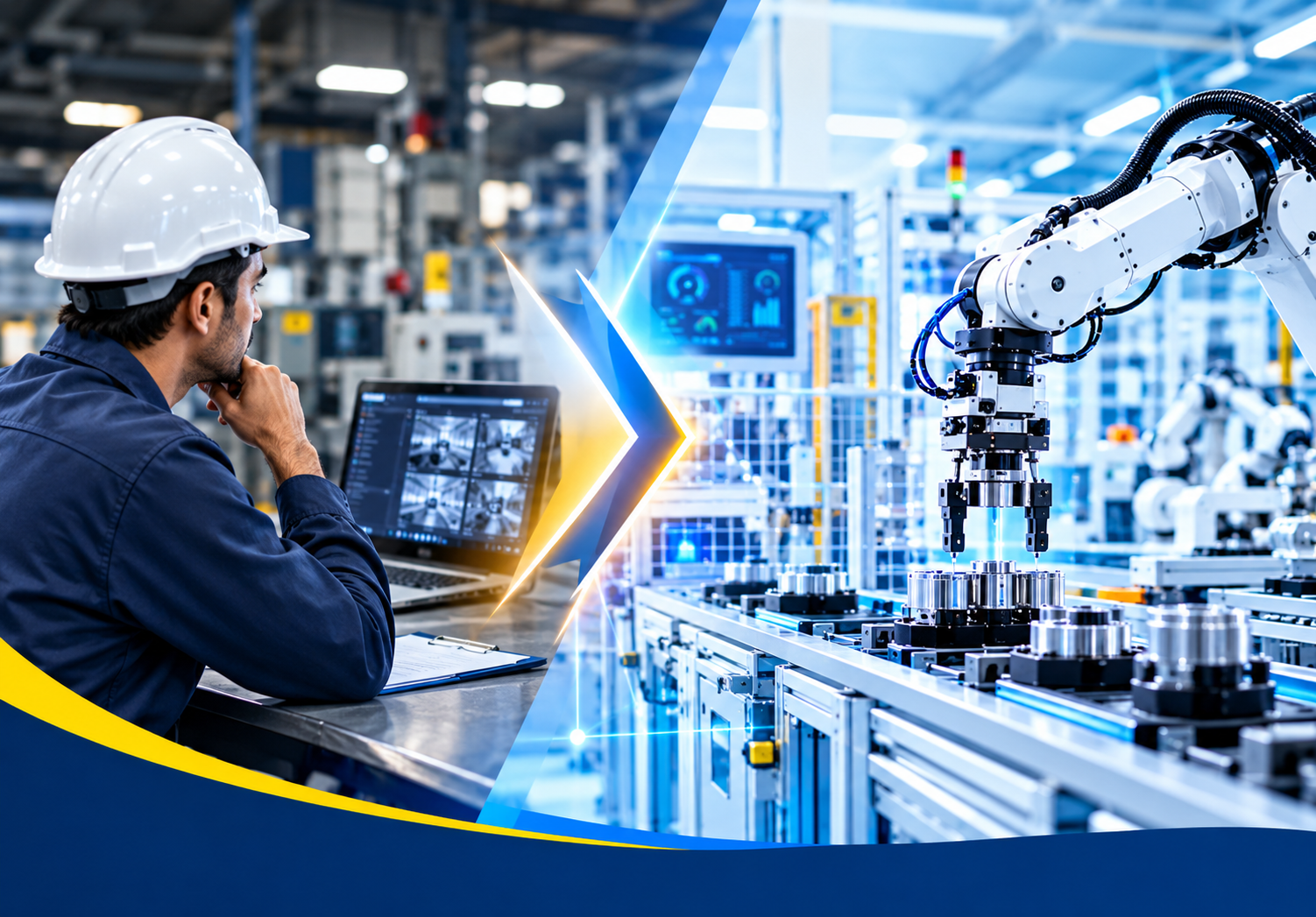
From automated material handling to robotic assembly and
real-time monitoring, modern solutions can help businesses reduce repetitive
workloads and make production processes more efficient.
Let Automation Do the Heavy Lifting
Industrial automation brings together technologies that help
machines, systems, and production processes work more intelligently.
Here are some solutions worth exploring:
1. Industrial Robotics
Robots can handle repetitive, precision-driven, and
physically demanding tasks such as assembly, welding, material handling, and
packaging. This allows production teams to focus on supervision,
problem-solving, and higher-value activities.
2. Smart Sensors and Instrumentation
Sensors and instrumentation help monitor variables such as
temperature, pressure, flow, position, and vibration. Reliable data allows
operators to understand what is happening on the production floor and respond
more effectively.
3. Machine Vision and Quality Inspection
Automated inspection systems can identify defects, verify
dimensions, and check product consistency. Depending on the application, these
technologies can support faster inspections and reduce dependence on manual
visual checks.
4. PLCs, SCADA, and Industrial Control Systems
Programmable logic controllers, supervisory control and data
acquisition systems, and industrial control technologies help coordinate
equipment, monitor operations, and manage production processes.
5. AI, IIoT, and Predictive Maintenance
Connected devices and intelligent analytics can help
businesses identify unusual operating patterns, monitor equipment health, and
anticipate potential maintenance needs. With the right implementation, these
technologies can reduce avoidable downtime and support better operational
decisions.
The key is to choose solutions based on actual production
requirements—not simply because a technology is trending.
From Production Challenges to Practical Solutions
Every manufacturing business has different priorities. One
company may want to improve production speed, while another may need better
quality control, lower energy consumption, improved traceability, or more
reliable equipment.
That is why discovering technologies in person can be
valuable.
At an industrial automation exhibition, buyers can compare
solutions, understand different applications, ask technical questions, and
speak directly with technology providers. These conversations help
decision-makers assess whether a product fits their existing systems,
workforce, production targets, and budget.
Instead of relying only on brochures or online research,
visitors can explore available technologies and identify potential suppliers
for their specific requirements.
Why Visit Automation Expo 2027?
Automation Expo 2027, the 20th India International
Trade Show, brings the industrial automation ecosystem together under one roof.
Taking place from 2–5 June 2027 at Halls 2, 3, 4
& 6, Bombay Exhibition Centre (BEC), Mumbai, the exhibition offers an
opportunity for industry professionals to discover technologies across
automation, robotics, artificial intelligence, instrumentation, and smart
manufacturing.
Whether you are planning a new production line, upgrading
existing machinery, improving inspection processes, or exploring digital
transformation, the exhibition can help you discover solutions and build
connections with relevant technology providers.
Visitors can use the event to:
- Explore
automation technologies for real industrial challenges.
- Discover
potential suppliers and compare available solutions.
- Connect
with industry professionals and technology experts.
- Investigate
ways to improve productivity, quality, and operational efficiency.
- Identify
technologies that support future manufacturing requirements.
Come With a Requirement. Leave With New Possibilities.
The best automation investment begins with the right
questions.
Which process consumes too much time? Where does production
slow down? Which tasks are repetitive? Where are quality issues occurring?
Could better monitoring help prevent equipment failures?
Bring these questions to Automation Expo 2027. Speak with
technology providers, explore relevant solutions, and discover new
possibilities for your business.
Because the goal is not to automate everything blindly. It
is to automate the right things, solve meaningful problems, and help people
focus on work that creates greater value.
Stop babysitting machines. Start discovering smarter ways
to work.
Plan Your Visit to Automation Expo 2027
Dates: 2–5 June 2027
Venue: Halls 2, 3, 4 & 6, Bombay Exhibition Centre (BEC), Mumbai
Ready to explore the next generation of industrial
automation?
Register your interest and plan your visit to Automation
Expo 2027. Discover technologies, meet potential suppliers, and find solutions
for your next production challenge.